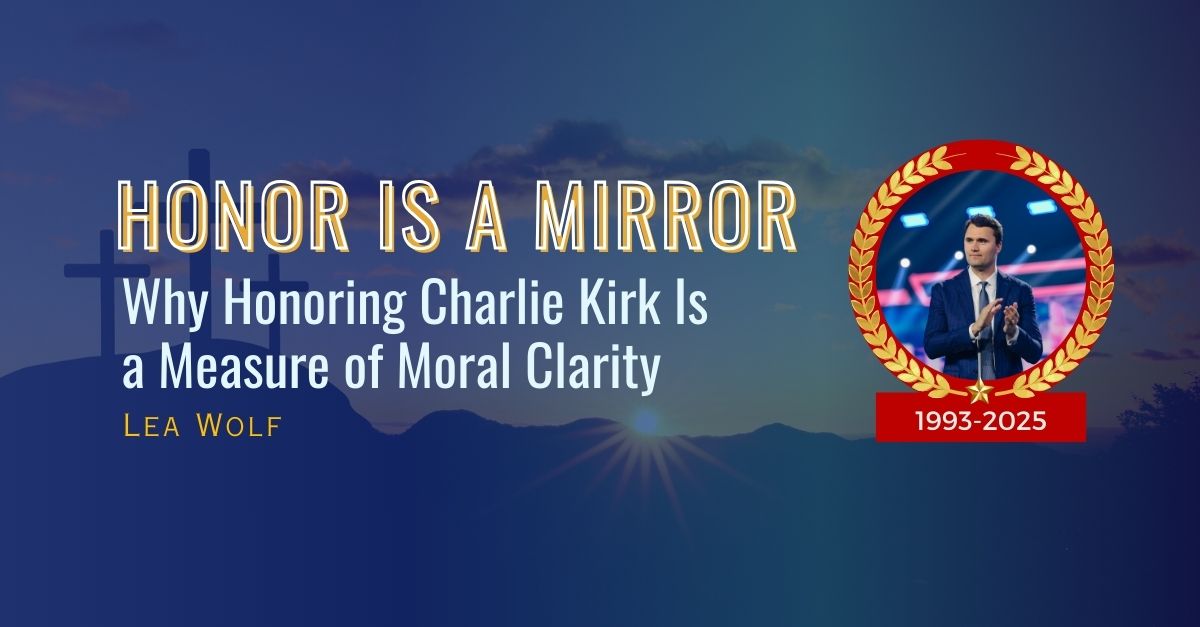
The Measure of Honor: A Mirror for Our Times
The Measure of Honor: A Mirror for Our Times
In the wake of Charlie Kirk’s assassination, anguish gave way to tributes — heartfelt, diverse, and spanning politics, culture, and faith. Yet one question continues to reverberate: Why should he be honored, and not others who have also been assassinated, like the Hortman family?
At first, it may seem like a fair question, especially from those who opposed his views. But it is also the wrong one. We live in an age where morality blurs, values bend, truth distorts, and virtue is too often measured by political allegiance. In such a world, both virtue and vice are weaponized, serving agendas instead of moral clarity and public interest.
Let us say unequivocally: any act of violence is horrific and wrong — no matter who the target may be. Yet what sets Charlie apart, and why his memory is marked by such a wide spectrum of tributes, is the impact he carried to 12.7 million followers and the legacy he left as a voice for a generation.
The Example of His Life
Charlie Kirk embodied Judeo-Christian values. Two of the Ten Commandments — “Honor your father and your mother” and “You shall not kill” — were violated by his assassin. Charlie lived by principles of faith and respect; the man who killed him betrayed not only the people who loved him, but also the moral fabric that binds a nation together. A powerful cultural elite has lost its moral compass, exploiting vulnerable young people with indoctrination, false promises, and twisted ideology — fueling a culture that justifies harm, glorifies destruction, and recasts hatred as virtue under the banner of ‘social justice.’
It is time to return (Teshuva) to the basics — to the Ten Commandments — to uproot these ailments and to reject, unequivocally, any celebration of death. Instead, we must commit ourselves to celebrating life, dignity, and the values that make us civilized human beings.
I did not personally follow Charlie Kirk, but we once hosted Turning Point representatives at our Del Mar Seacoast Republican Women’s Club. When a friend sent me the video of his assassination — blood gushing before more than 3,000 students — I was shattered. The assassin, consumed by hate, unleashed an act of evil that devastated families and communities across this nation and beyond its borders.
Charlie’s father’s anguished cry “Bring my son back! He was only 31,” pierced my soul. His wife’s desperate plea “Bring my husband back!” captured the raw agony of a family collapsing into despair. This was more than the loss of a husband and father. It was a nation robbed of a voice that mattered to millions — while the assassin left his own family shrouded in shame. In that contrast lies the measure of honor: one life remembered for forging bonds and living by the Creator’s way, the other for betrayal, disgrace, and destruction. Society and you too must decide which legacy to elevate.
When negative feelings fester or beliefs clash, they are signs to turn inward — to spark introspection, curiosity, and a call to LEAD: Listen to learn, Embrace both differences and common ground, Ask questions with openness, and Discern a path that builds bridges with moral clarity — transforming resentment into renewal and rooting life in truth and timeless principles. The difference is clear: victimhood clings to blame, while victorhood builds a tribe.
What I admired in Charlie was not just his convictions, but his character — his grace in controversy and his rare patience and perseverance when engaging even his fiercest critics. Even when mocked for never graduating college, he answered with composure and persistence. That is true honor: conviction without cruelty, resilience without rancor.
What Honor Really Means
Honor is more than ceremony; it is recognition — both spiritual and tangible — dedicating memory to a life that left a lasting mark. So when people ask, Why should Charlie Kirk be honored? the answer lies not in politics, but in legacy — the imprint he left on a generation.
The truth is, there will never be a single individual universally celebrated. Every life and legacy carries both admiration and opposition. Honor is not about unanimous agreement; it is about recognizing impact — the indelible mark a person leaves and the values their life upheld.
Honor is a mirror, reflecting whether we choose to hate or to heal, to ruin or to rebuild, to demean or to dignify.
Even more troubling are those in authority — media, academics, and public leaders — who should model dignity but instead disgraced themselves, smearing Charlie Kirk’s memory. CBS News reported employees fired after celebrating his death. At George Washington University, Anthony Pohoreliak, a director of academic initiatives, even wrote that Kirk’s assassination was ‘fair’ and that there should be ‘no prayers.’ Such words betray duty, incite hate, and distort justice. True honor defends life; it never cheers death.
By contrast, Charlie Kirk embodied honorable character. The only question is: do you embody his grace and honor?
Honor in Action
Honoring life is not about perfection; true honor springs from those who deeply cared — whether in honoring parents or dignified individuals who shaped a generation. A tribute to Charlie Kirk is well deserved, reflected in the breadth of honors across politics, culture, and faith. Honor is layered — personal, communal, cultural, and political. Local vigils, murals, and student gatherings stood alongside national and international recognition. President Donald Trump awarded him the Presidential Medal of Freedom, Vice President J.D. Vance led a White House tribute, and Israeli leaders — including Prime Minister Netanyahu and the Mayor of Netanya — named a city square in his memory. These tributes came from people who, in their own way, honored aspects of Charlie’s character, conviction, or courage. Together, these layers form a mosaic of how society esteems a life — and why Charlie Kirk’s legacy endures.
Closing Reflection
To those who ask why honor Charlie Kirk, I turn the mirror back: What will your legacy be? Will you be remembered for tearing life down — or for building humanity up? When history looks back, will it find honor in your name, or shame in your choices?
To honor Charlie is both a moral and national duty — a call to uphold values that dignify rather than demean, that build rather than break, that lift rather than divide, and that rest on personal responsibility to serve others with grace.
Charlie authored his own life — answering with composure, persistence, and purpose. That is true honor: not grievance but grit, not victimhood but victory, not self-pity but the courage to champion others.
Call to Action!
Agree or disagree with Charlie? You can still honor a man of such character — not just a voice, but a champion for a generation.
Please share your reflection by posting a comment such as:
“Despite disagreeing with Charlie on ___, I honor his…”
or
“I admire/respect Charlie for…”
Today, let us rise together and find a way to celebrate a life lived like a champion — and a life spent championing others in godly way.